
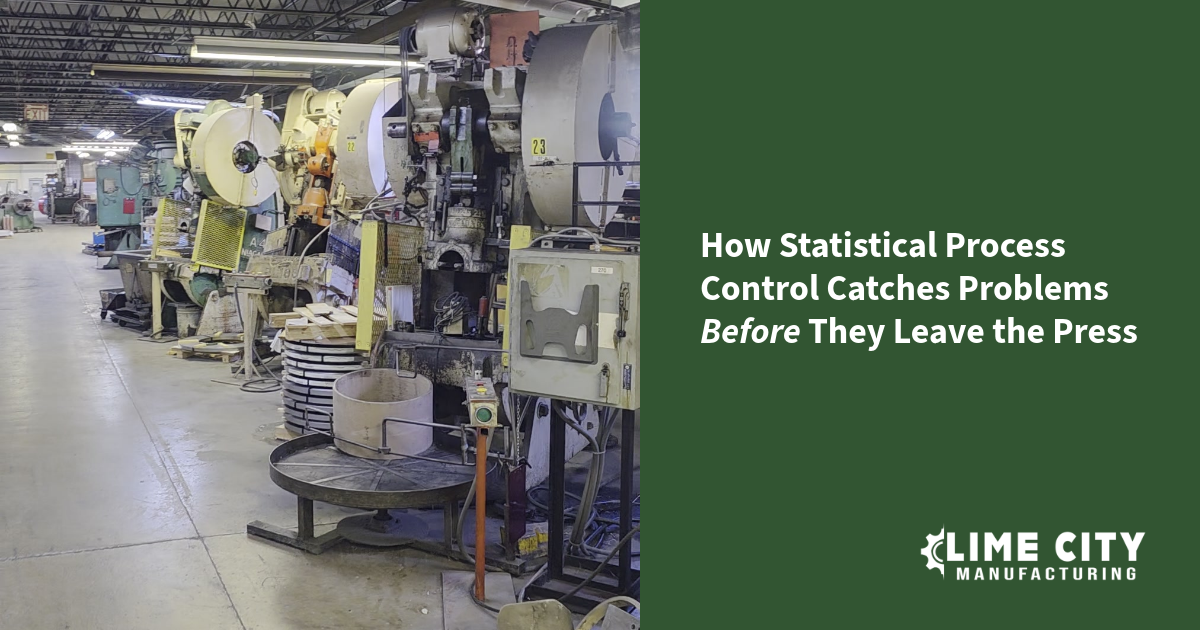
How Statistical Process Control Catches Problems Before They Leave the Press
A defect caught after a part ships costs far more than one caught during production. That's the thinking behind Statistical Process Control (SPC) at Lime City Manufacturing, a core part of our ISO 9001:2015-certified quality management system.
What Statistical Process Control Does
SPC uses data collected directly from the production process to monitor whether a stamping operation is running within its expected parameters. Rather than relying solely on inspecting finished parts, SPC tracks the process itself in real time, so shifts away from normal conditions can be identified while a run is still in progress.
From Data to Action
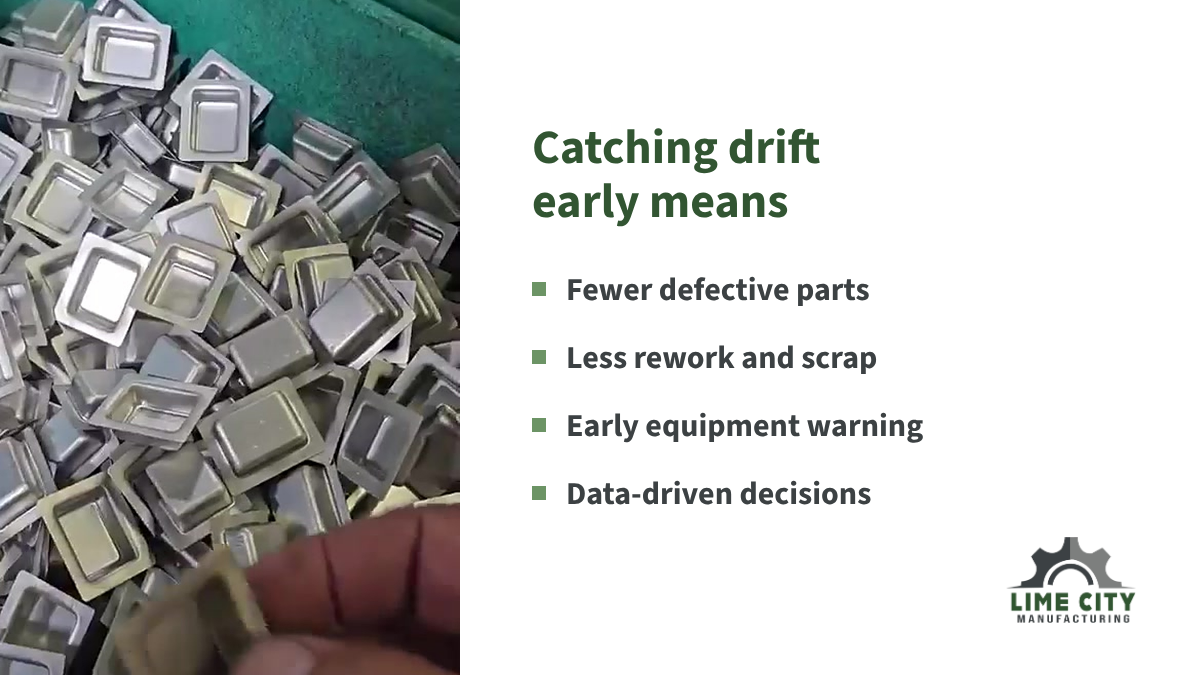
When SPC data shows a process drifting out of control, it's a signal, not just of a potential quality issue but sometimes of an equipment condition that needs attention. Catching that drift early means:
- Fewer defective parts: Problems are caught while they're still small, before they affect a full production run.
- Less rework and scrap: Adjustments happen before parts fall out of specification.
- Early warning on equipment issues: Process drift can point to wear or misalignment before it becomes a bigger problem.
- Documented, data-driven decisions: Corrections are based on measured trends, not guesswork.
Consistency Across Every Shift and Run
SPC monitoring works alongside our documented work instructions and standard operating procedures to keep production consistent no matter which shift or operator is running the press. That consistency lets us deliver the same quality on part 10 of a run as on part 10,000.
For our customers, SPC is part of what it means to work with an ISO 9001:2015 certified supplier: a production process that is actively monitored and controlled, not just inspected after the fact.